Biography
Ada Lovelace
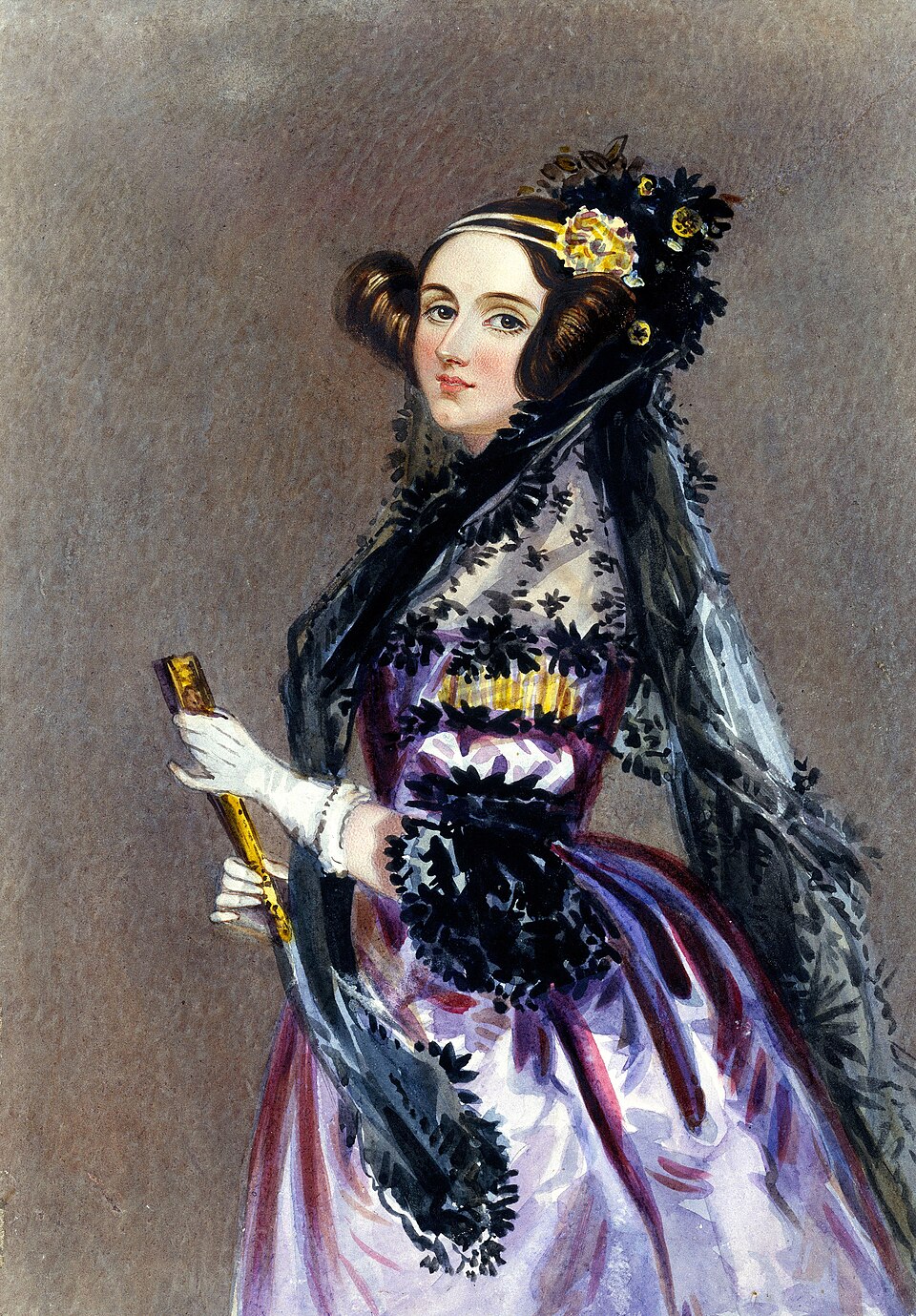
- Born
- 10 December 1815
- Died
- 27 November 1852
- Nationality
- British
- Known for
- The first published computer program, Notes on Babbage's Analytical Engine
Ada Lovelace wrote what is generally recognised as the first computer program, in 1843, for a machine that did not yet exist. The daughter of the poet Lord Byron, she was taught mathematics from an early age, unusual for a woman of her time, and she brought that training to bear on the most ambitious engineering idea of the age.
That idea was Charles Babbage’s Analytical Engine, a design for a general-purpose mechanical computer. Asked to translate an Italian account of the engine, Lovelace added a set of notes that ran to more than twice the length of the original. Buried in them, as Note G, was a detailed method for the engine to calculate Bernoulli numbers, a sequence of steps that reads like a program.
Her deeper insight was philosophical. Where others saw a fast calculator, Lovelace argued that a machine able to manipulate symbols according to rules could work on anything those symbols represented, not just numbers. She used music as her example. That is close to the modern understanding of what a computer is, and it is why her short career casts such a long shadow over the field.
Frequently asked
Why is Ada Lovelace called the first programmer?
In her 1843 notes she wrote a step-by-step method for the Analytical Engine to compute Bernoulli numbers. It is generally recognised as the first published algorithm intended to be run on a machine.
Did Ada Lovelace build a computer?
No. The Analytical Engine she wrote about was Charles Babbage's design and was never built in their lifetimes. Lovelace's contribution was to explain what such a machine could do and to write a program for it.
What did Ada Lovelace understand that others did not?
She saw that a machine that manipulated numbers could in principle manipulate anything that could be represented as symbols, including music, which is close to the modern idea of a general-purpose computer.